Introduction
The Canadian television landscape has evolved considerably in recent years. While traditional cable has long dominated Canadian households, IPTV (Internet Protocol Television) is gradually establishing itself as a serious and economical alternative. In 2025, more and more Canadians are “cutting the cord” and abandoning their expensive cable subscriptions in favor of more flexible and affordable IPTV solutions.
But what are the real differences between these two technologies? What are their respective advantages and disadvantages? And most importantly, which option is most advantageous for Canadian consumers in 2025? This comprehensive guide compares IPTV and traditional cable in detail to help you make an informed choice.
What is IPTV and How Does it Differ from Traditional Cable?
Definition and Operation of IPTV
IPTV (Internet Protocol Television) is a service that uses Internet protocol to broadcast television content via a high-speed Internet connection. Unlike classic web streaming, IPTV works with specific protocols that guarantee better quality and stability for live broadcasting.
IPTV content is transmitted via the Internet to a compatible device (Smart TV, Android box, Firestick, etc.) which decodes the signal to display channels and on-demand content. This technology allows access to thousands of channels from around the world without the usual geographical limitations.
Operation of Traditional Cable
Traditional cable uses physical coaxial cables to transmit television signals directly to your TV. These signals are sent simultaneously to all subscribers, whether they are watching a particular channel or not, which limits the number of channels that can be offered.
Cable providers in Canada such as Rogers, Bell, Vidéotron, or Shaw typically require the installation of specific equipment (decoders, cables) and often charge installation fees.
Cost Comparison: IPTV vs Cable in Canada
Average Cost of Traditional Cable in 2025
Cable packages in Canada are among the most expensive in the world, and prices continue to increase each year. In 2025, here’s what cable subscriptions cost on average in Canada:
- Basic package: $40-60 per month (local channels and some basic channels)
- Intermediate package: $80-120 per month (popular channels and some specialized channels)
- Premium package: $130-180 per month (including sports channels and movies)
Added to these costs are:
- Equipment rental fees: $10-20 per month per decoder
- Installation fees: $50-150 (often with commitment)
- Hidden fees and various taxes
An average Canadian household with two televisions typically pays between $1,200 and $2,000 per year for their cable television service.
Average Cost of IPTV in 2025
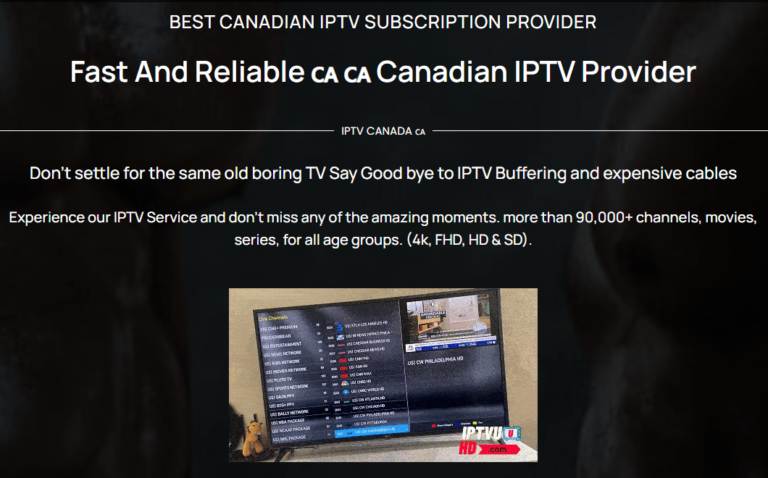
IPTV services like IPTVU HD offer much more competitive rates:
- Monthly subscription: $15-25 per month
- Quarterly subscription: $35-65 (equivalent to $12-22 per month)
- Annual subscription: $100-150 (equivalent to $8-12 per month)
Financial advantages of IPTV:
- No equipment rental fees (use your own devices)
- No installation fees
- No long-term commitment
- Multiple connections included (several televisions at no extra cost)
A Canadian household using IPTV typically pays between $100 and $300 per year, representing a 70-85% saving compared to traditional cable.
Content Comparison: Channels and Programming
Cable Channel Offering
Canadian cable providers typically offer:
- 30-50 channels in basic packages
- 100-200 channels in intermediate packages
- 200-300 channels in premium packages
Channels are organized into thematic “packs” (sports, movies, etc.) that often need to be purchased separately. International channels are limited and often offered in special high-priced packages.
IPTV Channel Offering
IPTV services like IPTVU HD offer:
- 10,000+ live channels in a single package
- All local and national Canadian channels
- Complete sports channels (TSN, Sportsnet, RDS, etc.)
- American and international channels
- Premium channels (HBO, Cinemax, Showtime) at no extra charge
IPTV also offers:
- VOD (Video on Demand) content with thousands of movies and series
- Catch-up TV to watch missed shows
- 4K and HDR content at no extra charge
Quality and Reliability: Technical Comparison
Image and Sound Quality
Traditional Cable:
- Standard HD quality on most channels
- Some channels in 4K (often with extra charge)
- Consistent quality but limited by cable bandwidth
- Variable video compression depending on providers
IPTV:
- HD quality on all channels
- Many channels in Full HD and 4K
- Quality dependent on your Internet connection
- Adjustable quality options based on your bandwidth
Reliability and Stability
Traditional Cable:
- Very stable under normal conditions
- Little affected by weather conditions (unlike satellite)
- Possible outages affecting entire neighborhoods
- Longer problem resolution time
IPTV:
- Depends on the quality of your Internet connection
- Premium services like IPTVU HD offer stability comparable to cable
- Anti-buffering technology on quality services
- Generally faster problem resolution
- Possibility to change server in case of problems
Flexibility and Features
Equipment and Compatibility
Traditional Cable:
- Requires a specific decoder from the provider
- Generally limited to television
- Equipment on rental with monthly fees
- Equipment upgrades often paid
IPTV:
- Compatible with many devices:
- Smart TVs (Samsung, LG, Sony, etc.)
- Android boxes
- Amazon Firestick
- Apple TV
- Computers, tablets, smartphones
- Use your own devices at no extra cost
- Simultaneous viewing on multiple devices
Advanced Features
Traditional Cable:
- Electronic program guide
- Limited recording (depending on the decoder)
- Parental control
- Video on demand (with additional fees)
- Advanced features often paid
IPTV:
- Complete electronic program guide
- Unlimited cloud recording
- Timeshift (pause/rewind live)
- Multi-screen (simultaneous viewing of multiple channels)
- Advanced content search
- Customizable favorites
- Dedicated mobile applications
- No extra fees for these features
Accessibility and Availability
Geographic Coverage
Traditional Cable:
- Limited to cabled areas (mainly urban)
- Unavailable in some rural areas
- Physical installation required
IPTV:
- Available wherever there is an Internet connection
- Ideal for rural areas without cable access
- Perfect for second homes or cottages
- Usable while traveling (hotels, trips)
Technical Requirements
Traditional Cable:
- No Internet requirements
- Professional installation often required
IPTV:
- Requires a stable Internet connection
- Minimum recommended speed: 15 Mbps
- 25+ Mbps recommended for multiple devices or 4K
- Simple installation, can be done by the user
Legality and Ethical Considerations
Legal Framework in Canada
The legality of IPTV services in Canada depends on several factors:
Traditional Cable:
- Entirely legal and regulated by the CRTC
- Clearly established broadcasting rights
IPTV:
- Legitimate services like IPTVU HD operate within a legal framework
- Some unauthorized services exist on the market
- Canadian jurisprudence is evolving on this subject
It’s important to choose a legitimate IPTV service that respects copyright and Canadian regulations.
Advantages and Disadvantages: Comparative Summary
Advantages of Traditional Cable

Very stable and reliable
Consistent quality independent of Internet
Local customer service with technical assistance
No need for Internet connection
Clearly established legal framework
Disadvantages of Traditional Cable

Very high cost
Contracts with commitment
Equipment on rental
Limited channel offering
Hidden fees and regular increases
Limited flexibility
Advantages of IPTV
Significantly lower cost (70-85% savings)
Much larger channel offering
International content at no extra charge
Advanced features included
Multi-device at no extra cost
No commitment or contract
Usage flexibility (home, travel, etc.)
Disadvantages of IPTV
Depends on the quality of your Internet connection
May require initial configuration
Variable quality depending on providers
Sometimes ambiguous legal framework (depending on services)
Who Should Choose IPTV Rather Than Cable?
IPTV is particularly suitable for:
- Budget-conscious people: Substantial savings compared to cable
- International content fans: Access to channels from around the world
- Tech enthusiasts: Appreciating advanced features and flexibility
- Multi-screen households: Use on multiple televisions at no extra cost
- Rural residents: Where cable is not available
- Frequent travelers: Possibility to use the service while traveling
- Canadian expatriates: Access to Canadian channels from abroad
- Sports fans: Access to all sports channels without additional packages
How to Transition from Cable to IPTV?
If you’re considering switching from traditional cable to IPTV, here are the recommended steps:
1. Check Your Internet Connection
- Test your Internet speed (minimum 15 Mbps recommended)
- Check your data plan (IPTV consumes 2-7 GB per hour depending on quality)
- Consider an upgrade if necessary
2. Choose the Right Equipment
Popular options:
- Amazon Firestick (affordable and simple option)
- Android TV box (more flexibility)
- Formuler or MAG Box (specially designed for IPTV)
- Smart TV with integrated IPTV applications
3. Select a Reliable IPTV Service
Selection criteria:
- Reputation and customer reviews
- Free trial period
- Responsive customer support
- Canadian servers for better performance
- Complete offering of Canadian channels
IPTVU HD meets all these criteria with an offering specially designed for the Canadian market.
4. Test Before Canceling
- Use the trial period to evaluate the service
- Test during peak hours (evenings and weekends)
- Try different IPTV applications to find the one that suits you
- Check the availability of your favorite channels
5. Cancel Your Cable Subscription
- Wait until the end of your commitment if possible
- Return rented equipment to avoid fees
- Keep your Internet service if you’re satisfied with the provider
Conclusion: IPTV, the Future of Television in Canada?
In 2025, IPTV represents a serious and economical alternative to traditional cable for Canadians. With potential savings of 70-85% on annual costs, a much larger channel offering, and unmatched flexibility, IPTV meets the needs of modern consumers.
Traditional cable retains certain advantages in terms of stability and simplicity, but its rigid economic model and high costs make it increasingly less competitive against IPTV solutions like IPTVU HD.
For the majority of Canadians, particularly those looking to reduce their monthly expenses without sacrificing their television experience, IPTV now represents the best choice. With a stable Internet connection and suitable equipment, you can access a larger television universe at a fraction of the cost of traditional cable.
IPTVU HD invites you to discover this new way of consuming television with a no-commitment trial. Join the thousands of Canadians who have already chosen to “cut the cord” and embrace the future of television.